
West Coast Syrup Co. - Seattle
The West Coast Syrup Co. was listed in the 1889 Polk Directory as being led by A.H. Boyd as president and A.H. Case as secretary. The company was incorporated in 1901 and remained at that location until filing an application to construct a bridge to access its new factory near Judkins Place in Seattle in 1902. Very little information about this company can be found after this timeframe.
Note: No Polk listings or newspaper ads after 12/19/02
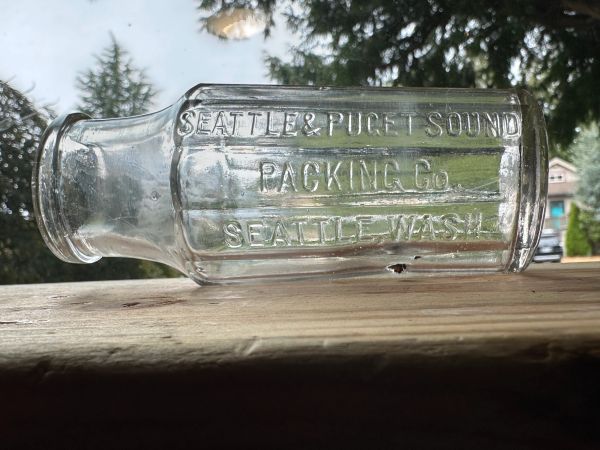
Seattle & Puget Sound Packing Co. - Seattle
The Seattle & Puget Sound Packing Company was started by William Laack, John Braun and Ernest Buehl as initial stockholders with a capital investment of $3,000 in April 1892. The company was originally located at the foot of the Grant St. Bridge south of Seattle - known as the Georgetown area of the city. The company specialized in the packing and preserving of fruits, vegetables and other products and was best known for its "Liberty Brand" of sauerkraut. By 1903, the company had changed hands and was next owned by William Lewis, led by H. Schoken as its president and had moved operations to a 7 story building at 813-187 7th Ave. S. in Seattle. The company utilized a variety of seasonal labor and often ran advertisements in the local news papers for the temporary employment of between 50-200 people (mostly women & girls) to pack their products. The plant was noted for producing up to 3,000 cases of product per day and sometimes, not with the highest levels of quality. In February 1900, Schoken ran an op/ed lambasting the so-called "White Food Law" (later to be known as the Pure Food and Drug Act of 1906) due to the stringent testing of ingredients and the edict "...to make an article appear better than nature has made it", thus making it impossible for farmers and food manufactures to make a profit. In 1913, the company was fined for selling canned crab flakes infested with living ptomaine poison producing bacteria. By 1922, the company fell into receivership and was forced by a judge to sell its assets and discontinue business.
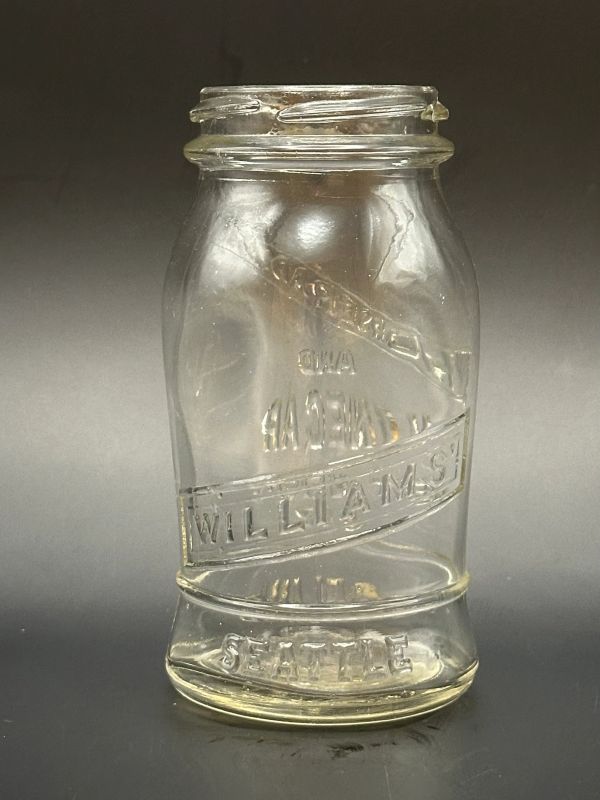
Williams & Co. Horseradish - Seattle
Williams & Co. was started in Portland Oregon by Ernest E. Williams in 1902 as a local producer of horseradish and potato chips, selling its products door-to-door in the Portland area. Williams expanded the business to Seattle in 1919 with Ernest's son Frank serving as the general manager/owner of the Seattle plant. The Seattle operation was initially located at 80 Bell St. and expanded to a new plant at 1405 Elliott Ave in 1932 - the same year that the business expanded into the San Francisco market. Frank's son E. Leon Williams took over the Seattle business that same year when Frank moved to Portland to run that operation. The new Seattle plant allowed the company to expand its operation to use 3 boxcar loads of raw horseradish within a matter of weeks and its newly expanded potato chip operation the ability to produce 1 million pounds of potato chips per year. The business sold its products to areas such as: Alaska, the Phillipines, Hawaii, China and Japan. The Williams & Co. operations ended in Seattle and Portland when they were purchased by the Frito Co. of San Mateo Ca. in 1960.
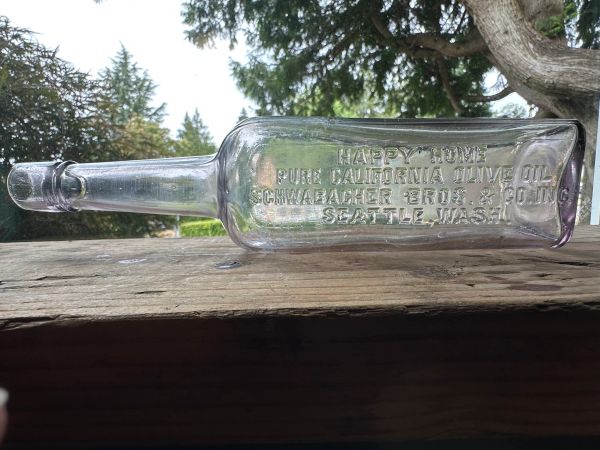
Happy Home Olive Oil Schwabacher Bros. & Co. - Seattle
On October 11, 1869, the firm Schwabacher & Bros. first advertised merchandise to be sold in their Seattle store. On October 24, 1872, Seattle's first brick building was constructed by Schwabacher Bros. & Company and stood on the west side of Commercial Street (1st Avenue S) just south of Mill Street (Yesler Way). Schwabacher's was a general store and wholesale house which purveyed everything "from a needle to an anchor." embracing dry goods, groceries, and hardware, crockery, clothing, boots and shoes, liquors, tobaccos, ship supplies, farming and mining implements, iron, steel, nails, glass, and every other commodity that could be thought of at the time. The company was instrumental in supplying goods for the Alaska Gold Rush from their Seattle store and pier.
Everett Bottling Works - Everett
The Everett Bottling Works was founded in 1902 by Peter Edward Misgen and Alexander E. Kick, who also founded the Sedro‐Woolley Bottling Works in 1903. In 1906, Kick became sole-owner of the company which bottled a variety of local sodas as well as beer from the Angeles Brewing & Malting Co. of Port Angeles. It stopped bottling Angeles Beer due local Everett prohibition laws taking effect in 1911 and the bankruptcy of the Angles Brewing and Malting Co. in 1912. Kick continued to bottle a variety of sodas until he retired and sold the company to the Pepsi Bottling Co. of Everett in 1961. He passed away in Scottsdale Az. in 1981 at the age of 98.
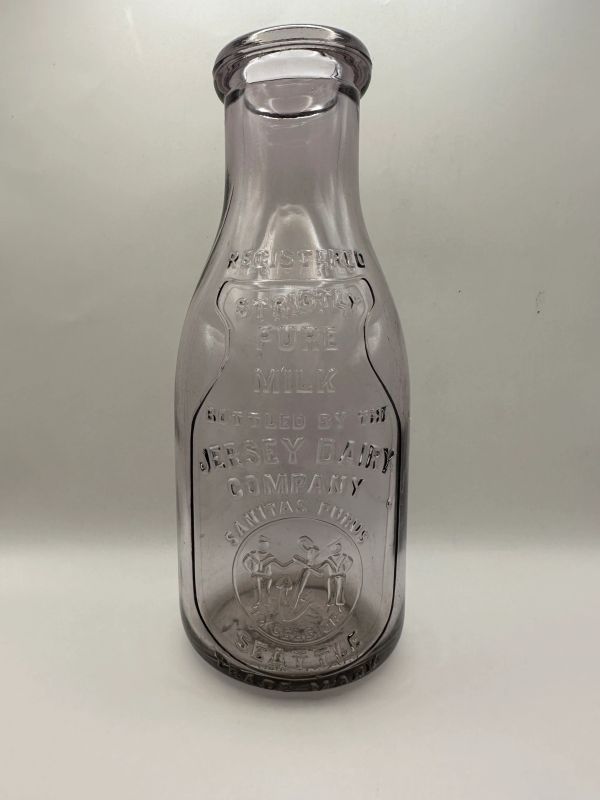
Jersey Dairy - Seattle
The Jersey Dairy Co. was started by local dairyman A. Z. Erickson in 1903 and its newer building was completed at the corner of Denny and Taylor in 1906. Erickson had an "interesting" career in the dairy business in Seattle as he was arrested numerous times for adulterating milk with formaldehyde in order to ensure its sweetness; reducing the butterfat content of the milk and conspiring with fellow dairymen of price-fixing in order to raise the price of milk to the consumer. In 1911, he claimed to have the first electric milking machine in Seattle which was to ensure sanitation, save processing time and workers lives through better milking conditions. He remained as owner of the business until around 1928 when it moved its operation to 1440 Jackson St. with A. Guerin as its president. Carnation Farms Products consolidated Bryant's West Seattle Dairy, Pure Milk & Mayflower Dairies, Clark Ice Cream Co. and the Jersey Dairy in March of 1929 and allowed each company to keep their brand name while in business.